StepOne
/Design System
The essential foundation for creating stunning digital experiences
How to start
Download Assets
UST StepOne Design System team:





Importance of a Design System
Design Systems are crucial in modern software development and user experience design. They offer benefits such as consistency in branding, improved efficiency, enhanced collaboration, scalability, and the empowerment of creativity and innovation. By embracing Design Systems, we can elevate our capabilities, deliver exceptional experiences, and drive organizational success.
Definition and Key Concepts
Building a Common Understanding
Definition
Definition A Design System is a centralized collection of design guidelines, patterns, and assets that serves as a single source of truth for the visual and interactive elements of a product or brand.
Key Concepts:
- Consistency: ensuring visual and experiential coherence across all touchpoints, promoting a seamless user experience and reinforcing brand identity.
- Reusability: design components, patterns, and styles that can be reused across different projects, saving time and effort in design and development. Scalability: the ability of the Design System to accommodate growth, expansion, and the addition of new features or products without sacrificing consistency or efficiency.
- Flexibility: the adaptability of the Design System to accommodate different platforms, devices, and user contexts while maintaining a consistent experience.
- Governance: establishing clear guidelines, standards, and processes for maintaining and evolving the Design System over time, ensuring its effectiveness and relevance.
A design system is a set of standards to manage design at scale by reducing redundancy while creating a shared language and visual consistency across different pages and channels.”
Cost Reduction and Faster Development Times
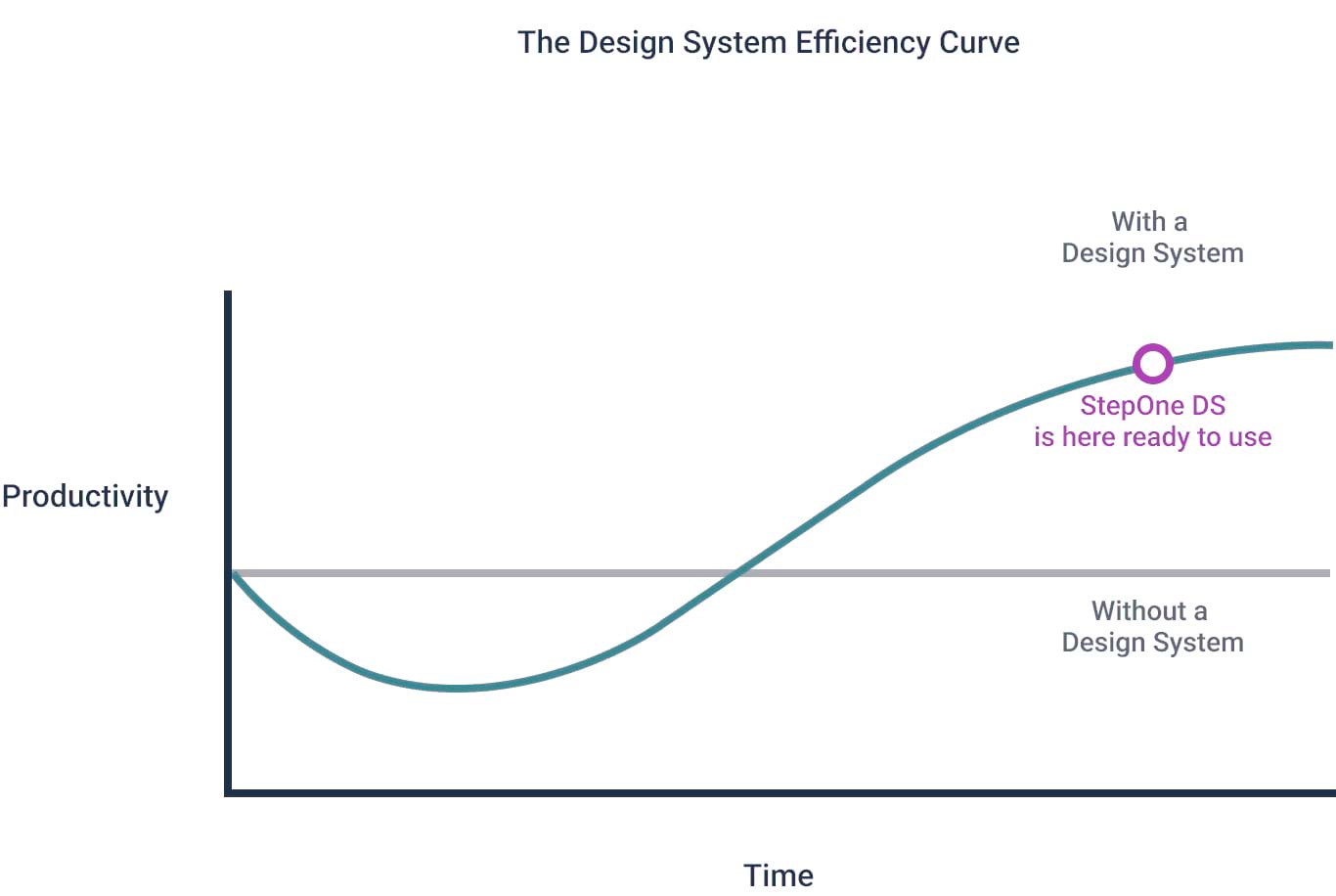
Cost Reduction and Faster Development Times
A Design System improves efficiency and productivity while amplifying team performance through several key aspects:
Key Concepts:
- Streamlined Workflows: with predefined design elements and guidelines, teams can work more efficiently and collaboratively. Designers and developers can align their efforts and make decisions faster, reducing delays and enhancing productivity.
- Faster Iterations: with a Design System in place, teams can iterate quickly and make changes more efficiently. The consistent design language and reusable components enable rapid prototyping and testing, leading to faster iterations and improvements.
- Reduced Learning Curve: a Design System provides a standardized framework that team members can easily learn and adopt. This reduces the time required for onboarding new team members and promotes a seamless transition between projects.
- Cross-functional Collaboration: design Systems foster collaboration between designers, developers, and other stakeholders. With a shared language and reference point, teams can work together more effectively, aligning their efforts and creating a cohesive end product.
- Improved Quality: design Systems help enforce design and development best practices, ensuring a higher level of quality and consistency in the final output. This leads to improved user experiences and customer satisfaction.